

在前面的文章里面,我们已经实现了一个服务端的定义及功能运行。这里的话我们就要开启客户端模块的编写,首先大家想想,客户端连接服务器需要做什么?
那肯定是需要这几个基础条件:
1、定义一个客户端。
2、定义一个客户端的请求协议
所以这里的话,我们来实现下这两个需求。
一、首先我们需要定义一个客户端,这里我们的服务器端是通过netty定义的,所以这里我们客户端也是用netty来定义。
package org.wz.rpc.framework.client;

import org.wz.rpc.framework.model.ZookeeperMetadataData;

/**
 * 网络请求客户端,定义网络请求规范
 *
 */
public interface NetClient {
    byte[] sendRequest(byte[] data, ZookeeperMetadataData zookeeperMetadataData) throws InterruptedException;
}
这里我们定义的客户端,相当于定义一个httpclient,让我们通过这个client来发送消息给服务器端。所以我们需要来实现下这个client的具体逻辑,再实现里面,我们主要做以下几个事情:
获取服务端的元数据信息
向服务端发送请求获取response
所以这里我们的实现代码如下:
package org.wz.rpc.framework.client;

import org.wz.rpc.framework.handler.SendHandler;
import org.wz.rpc.framework.model.ZookeeperMetadataData;

import io.netty.bootstrap.Bootstrap;
import io.netty.channel.ChannelInitializer;
import io.netty.channel.ChannelOption;
import io.netty.channel.ChannelPipeline;
import io.netty.channel.EventLoopGroup;
import io.netty.channel.nio.NioEventLoopGroup;
import io.netty.channel.socket.SocketChannel;
import io.netty.channel.socket.nio.NioSocketChannel;
import lombok.extern.slf4j.Slf4j;

/**
 * Netty网络请求客户端,定义通过Netty实现网络请求的细则。
 *
 */
@Slf4j
public class NettyNetClient implements NetClient {

    /**
     * 发送请求
     *
     * @param data    请求数据
     * @param service 服务信息
     * @return 响应数据
     * @throws InterruptedException 异常
     */
    @Override
    public byte[] sendRequest(byte[] data, ZookeeperMetadataData zookeeperMetadataData) throws InterruptedException {
        String[] addInfoArray = zookeeperMetadataData.getAddress().split(":");
        String serverAddress = addInfoArray[0];
        String serverPort = addInfoArray[1];

        SendHandler sendHandler = new SendHandler(data);
        byte[] respData;
        // 配置客户端
        EventLoopGroup group = new NioEventLoopGroup();
        try {
            Bootstrap b = new Bootstrap();
            b.group(group).channel(NioSocketChannel.class).option(ChannelOption.TCP_NODELAY, true)
                    .handler(new ChannelInitializer<SocketChannel>() {
                        @Override
                        public void initChannel(SocketChannel ch) {
                            ChannelPipeline p = ch.pipeline();
                            p.addLast(sendHandler);
                        }
                    });

            // 启动客户端连接
            b.connect(serverAddress, Integer.parseInt(serverPort)).sync();
            respData = (byte[]) sendHandler.rspData();
            log.info("SendRequest get reply: {}", respData);
        } finally {
            // 释放线程组资源
            group.shutdownGracefully();
        }

        return respData;
    }
}
这里我们编写了一个SendHandler来处理具体的发送请求,代码示例如下:
package org.wz.rpc.framework.handler;

import java.util.concurrent.CountDownLatch;

import io.netty.buffer.ByteBuf;
import io.netty.buffer.Unpooled;
import io.netty.channel.ChannelHandlerContext;
import io.netty.channel.ChannelInboundHandlerAdapter;
import lombok.extern.slf4j.Slf4j;

/**
 * 发送处理类,定义Netty入站处理细则
 *
 * @author 东方雨倾
 * @since 1.0.0
 */
@Slf4j
public class SendHandler extends ChannelInboundHandlerAdapter {

    private CountDownLatch cdl;
    private Object readMsg = null;
    private byte[] data;

    public SendHandler(byte[] data) {
        cdl = new CountDownLatch(1);
        this.data = data;
    }

    /**
     * 当连接服务端成功后,发送请求数据
     *
     * @param ctx 通道上下文
     */
    @Override
    public void channelActive(ChannelHandlerContext ctx) {
        log.info("Successful connection to server:{}", ctx);
        ByteBuf reqBuf = Unpooled.buffer(data.length);
        reqBuf.writeBytes(data);
        log.info("Client sends message:{}", reqBuf);
        ctx.writeAndFlush(reqBuf);
    }

    /**
     * 读取数据,数据读取完毕释放CD锁
     *
     * @param ctx 上下文
     * @param msg ByteBuf
     */
    @Override
    public void channelRead(ChannelHandlerContext ctx, Object msg) {
    	log.info("Client reads message: {}", msg);
        ByteBuf msgBuf = (ByteBuf) msg;
        byte[] resp = new byte[msgBuf.readableBytes()];
        msgBuf.readBytes(resp);
        readMsg = resp;
        cdl.countDown();
    }

    /**
     * 等待读取数据完成
     *
     * @return 响应数据
     * @throws InterruptedException 异常
     */
    public Object rspData() throws InterruptedException {
        cdl.await();
        return readMsg;
    }

    @Override
    public void channelReadComplete(ChannelHandlerContext ctx) {
        ctx.flush();
    }

    @Override
    public void exceptionCaught(ChannelHandlerContext ctx, Throwable cause) {
        log.error(cause.getMessage(),cause);
        ctx.close();
    }
}
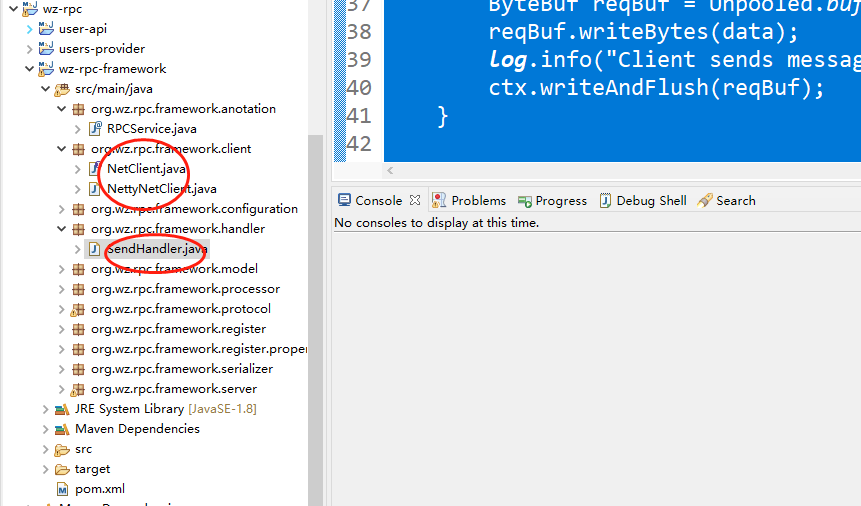
以上3个代码逻辑,我们就完成了网络客户端的定义,现在的项目结构示例图如下:
最后按照惯例,附上本案例的源码,登录后即可下载:



还没有评论,来说两句吧...